BTEC International | Pearson qualifications

BTEC International

Subject update | Mon Dec 08 00:00:00 UTC 2025

December 2025 Psychology subject update

Hi everyone,

Your December Psychology Update Is Here! Along with general updates including news of the January Challenge - a fun, free programme of creative prompts. It’s all about creativity, collaboration, and fresh thinking. This is also a great way to introduce positive approaches to mental health and personal development in the psychology classroom!

We also have news of updated sample papers for A Level psychology reflecting the changes we have recently announced, a survey for GCSE teachers as we consider an increase to exam timing, links to recordings of recent Exam Insights training and upcoming events in the New Year on Issue and Debate questions.

Best wishes,
Tim Lawrence
Psychology Subject Advisor

Read more

This update includes:


Key dates

12 December Access to Scripts deadline for June 2025 series
12 January A Level Psychology Deep Dive into Issue and Debate questions training
21 January IG and IAL results from October/November series to centres
22 January IG and IAL results from October/November series to candidates
5 February GCSE Psychology Deep Dive into Issue and Debate questions training

Final exam timetables for the summer 2026 exam series are available on our webpage linked below along with those for International A Level exams in January 2026.


General updates

The Curriculum and Assessment Review: our response

{{ image.gatingTitle }}

{{invalidUserName}}
{{invalidUserMail}}
{{errorMessage}}


The Curriculum and Assessment Review
is an important milestone for education and skills in the UK – and it’s just the beginning. 

We welcome the Review’s support for many of the recommendations we shared. All of these have been inspired by our work with schools and colleges across the country. And we’ll keep working to build an education system that empowers students, champions teachers, and drives the UK’s long-term success. 

As we now move from ideas into further action, we’ll keep collaborating with educators, students, partners, sector experts to drive manageable and truly impactful change.  
 
We’ve already started to do this and would love for you to join us in our next steps. 

The January Challenge 2026

{{ image.gatingTitle }}

{{invalidUserName}}
{{invalidUserMail}}
{{errorMessage}}


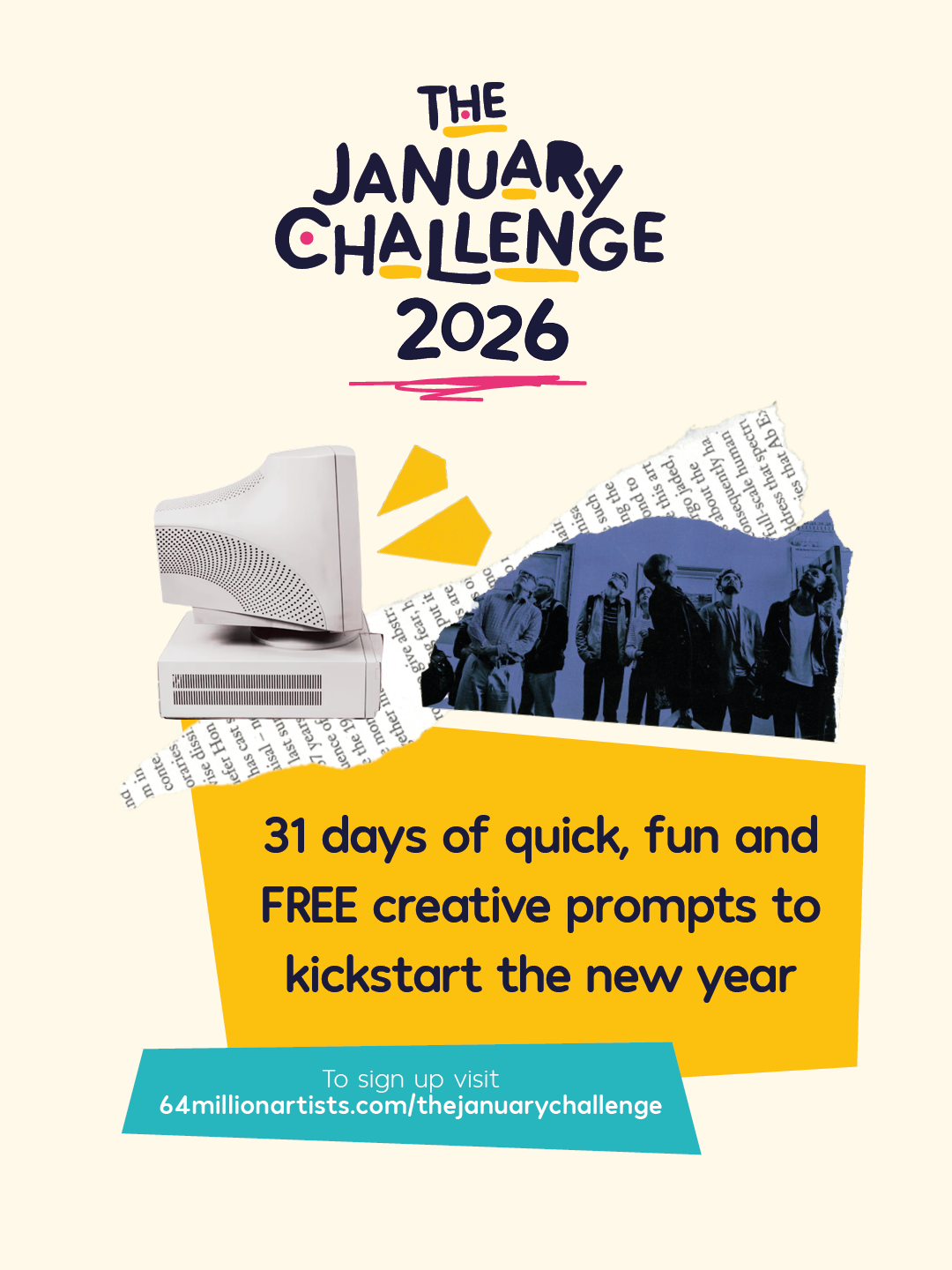
Join the final January Challenge!

Pearson is proud to partner with 64 Million Artists for the last-ever January Challenge – a free programme of daily creative prompts throughout January. Perfect for classrooms, staff rooms, and whole-school activities.

This year the theme is ‘Courageous Change’ with each of the prompts designed to help us get a new perspective, build our courage and helpus collaborate so that we can be more prepared for this ever changing world.

At Pearson, we've helped create the schools resource pack again this year and two prompts were written by your Subject Advisors!

To get involved, you can:

  • Sign up to receive daily creative prompts in January
  • Download the schools pack
  • Use the schools pack to help your school get creative and make change

Last year 360,000 people took part and we’re hoping to make the last one the biggest and best. There’s no better time to make change than now, so sign up and take part, and we’ll see you there!

Pearson Edexcel Art and Design teacher group for GCSE, A Level and International GCSE Art and Design teachers. Run by your Subject Advisor Jaclyn Wiid.

{{ image.gatingTitle }}

{{invalidUserName}}
{{invalidUserMail}}
{{errorMessage}}

Do you follow our general Pearson Edexcel page on Facebook?

From the 19th December, our Pearson Edexcel page will be closing but you can still find the same great content on our new Pearson Edexcel group. The group will be a space for sharing examiner recruitment opportunities, important information published in our Pearson General Qualifications Bulletin, support documents for students, parents and carers and much more.  

UK A Level Psychology sample papers updated

As we have previously shared our UK A Level paper 1 and paper 2 will have an additional 15 minutes allowed from the June 2026 exam series. AS and A Level papers also have some minor improvements to their formulae and statistical tables sections (we have reordered the tables for the Mann-Whitney U test and have improved the instructions for the Wilcoxon signed ranks test).
 
You can now download updated Sample Assessment Materials showing these changes below, along with our 'summary of changes' document and a separate 'formulae and statistical tables' document which may be useful for mock exams.

{{ gatDoctitle }}

{{invalidUserName}}
{{invalidUserMail}}
{{errorMessage}}

GCSE Psychology exam timing - have your say

Megaphone icon

{{ gatDoctitle }}

{{invalidUserName}}
{{invalidUserMail}}
{{errorMessage}}

In response to teacher and student feedback we have increased the time allowed for our UK A Level paper 1 and paper 2, and we are now seeking teachers' views on a similar change for our GCSE Psychology papers. 

The recently published Curriculum and Assessment Review states the UK Government's intention to reduce GCSE assessment time by 10% when new GCSEs are introduced. While we approve this future direction, we are not able to reduce the number of marks or the amount of content assessed on papers for our current GCSE. We therefore wish to explore the option of increasing the time in order to give candidates more opportunity to show what they have learned.


Training and professional development

Sign up for our free Deep Dive into Issue and Debate questions training for GCSE and A Level Psychology using the link below. These sessions have been planned in response to requests from teachers for advice on how to prepare students for these exam questions.

  • A Level Deep Dive into Issue and Debate questions: Monday 12 January, 16.00-17.30
  • GCSE Deep Dive into Issue and Debate questions: Thursday 5 February, 16.00-17.30

Exam Insights training for IAL, A Level and GCSE Psychology took place in November. Recordings of the GCSE and A Level events are now available, and the IAL recording will be shortly. To protect these papers for use as unseen mock exams the recordings are 'unlisted' on YouTube - to access them teachers can download the 'locked' event packs from the 'teaching and learning materials' section of the qualification website - see links below!

These events are a great way to sharpen your understanding of what examiners are looking for and help students feel more confident going into their exams.


FAQs from psychology teachers 

I've had a number of good questions recently about practicals for A Level and IAL psychology. The expectations are basically the same for both qualifications. The specifications set out the requirements for each practical. There are suggestions, but any practical that meets the requirements in the specification is fine as long as it's ethical (candidates will not receive credit in the exam for describing unethical investigations!). 

Students can work individually or in groups on practical activities, and it's perfectly acceptable to run a 'class practical' to ease the support burden on the teacher! They should write a report on the practical, but this doesn't need to be assessed. What matters is that they understand what was done and why, how the results were analysed and what they showed, and can evaluate the investigation - this is what the exam questions will test. 

I've collected together IAL and A Level exam questions in a document you can download from our community group via the link below - the UK A Level ones have mark schemes and examiner reports. Whichever course you teach, both sets of questions are relevant.

In psychological research, findings and conclusions are closely linked - but they’re not the same thing. Here's how to help students distinguish them clearly:

🔍 Findings: What the data shows

Findings are the results of a study — the raw or processed data that emerge from the research. This might include:

  • Statistical outcomes (e.g. mean scores, correlation coefficients)
  • Observed behaviours
  • Patterns or trends in the data

They are descriptive and objective - they tell us what happened, but not why.

For example, in a study on screen time and language skills, a finding might be:

“Children who used screens for more than 3 hours a day scored lower on vocabulary tests.”

This is a result, not an interpretation.

🧠 Conclusions: What the researcher infers

Conclusions go a step further. They are interpretations of the findings - what the researcher believes the results mean in the context of the hypothesis or theory.

They often involve:

  • Inference (e.g. suggesting a relationship or cause)
  • Evaluation (e.g. considering limitations or implications)
  • Judgement (e.g. deciding whether the hypothesis was supported)

Using the same example, a conclusion might be:

“Excessive screen time may negatively impact children's language development.”

This is a claim based on the findings - and it mus be justified with evidence.

🧪 Common candidate pitfalls

Insights from the latest exam analysis in show that many candidates:

  • Summarise findings but don’t go on to draw conclusions
  • Confuse correlation with causation, especially when drawing conclusions from correlational data
  • Miss AO3 marks by failing to justify their conclusions with data

For example, some candidates inferred cause and effect from correlational findings, which is a misstep. Others described the results well but didn’t interpret them - meaning they missed the chance to demonstrate deeper understanding.

✅ How to support students

1. Teach the difference explicitly. Use examples from past papers to show how findings and conclusions are assessed separately under AO2 and AO3.

2. Use sentence starters. Encourage students to use phrases like:

  • “The data shows…” (for findings)
  • “This suggests that…” or “This may indicate…” (for conclusions)

3. Practice with unseen data. Give students unfamiliar graphs or tables and ask them to:

  • Describe the findings
  • Draw a justified conclusion

4. Highlight the importance of justification. Remind students that conclusions must be backed up with data - this is where AO3 marks come from.

The sensory register is difficult to 'pin down' compared to STM and LTM, both in terms of researching into it and in terms of explaining it. This accounts for the range of descriptions in textbooks and other sources.

Here are some suggested key teaching points:

  • Sensory register capacity is very large - potentially equalling the total of all the information that is sensed. For example the iconic (visual) register holds all the information that our visual system extracts from our eyes, but only very briefly.
  • Duration is very short but depends to some extent on the sense involved. Iconic (visual) is less than a second whereas echoic (auditory) is a little longer (up to 4s).
  • We can't directly access the contents of the sensory register to measure it - we rely on what participants report having seen / heard etc, and in order to report what they have sensed they need to pay attention to it and transfer it into their STM. This leads to some apparently contradictory findings!

The last sentence of Sperling's (1960) abstract is helpful: "It is also concluded that the high accuracy of partial report observed in the experiments does not depend on the order of report or on the position of letters on the stimulus, but rather it is shown to depend on the ability of the observer to read a visual image that persists for a fraction of a second after the stimulus has been turned off."

To make sense of this students need to understand that 'partial report' means that participants were only asked to report on one row of letters (indicated by a high, medium or low pitched tone immediately after they disappeared). The 'visual image that persists for a fraction of a second' is all the information that was seen, while it lasts in the sensory register.

The terms 'rehearsal', 'maintenance rehearsal' and 'elaborative rehearsal' are used in different ways in different texts describing the MSM and cause considerable confusion for teachers as well as for students.

I suggest that the best option to use when describing the MSM is to simply use the term 'rehearsal' - as you suggest this is what Atkinson and Shiffrin used when they introduced the model.

A good evaluation point for the MSM is that it over-emphasises the importance of rehearsal (in general) as the means of transferring information into LTM. A good counter-theory is Craik and Tulving's 'level of processing' explanation which (put simply) states that it isn't the amount of rehearsal that matters, but rather how deeply the information is processed. The concept of 'elaborative rehearsal' is influenced by this concept and can be seen as an improvement / clarification of the original rehearsal concept, as it emphasises the need to deeply process and link information to existing LTM contents in order to transfer it, whereas 'maintenance rehearsal' (e.g. repeating a phone number to ourselves while looking for a pen or a phone to record it with) only holds information in STM while the rehearsal continues.

Having first identified the importance of consistency for minority influence in 1969, Moscovici went on to conduct further experiments and in 1976 set out a more detailed theoretical framework for understanding the process of minority influence. This is quite 'overlapping' with his conclusions from 1969 but had more of a focus on the underlying cognitive processes involved. The following summary of his 1976 theory contains more detail than students need, but is intended as a guide for teachres as this is genarlly dealth with quite briefly in textbooks.

Moscovici’s 1976 Theory of Minority Influence:

Core Aspects

In his 1976 paper Studies in Social Influence: III. Majority versus Minority Influence in a Group, Moscovici proposed a conversion theory of minority influence. This theory was designed to explain how a consistent minority can bring about deep, lasting change in the beliefs of the majority.

1. Innovation vs Conformity

Moscovici made a clear distinction between:

  • Conformity: Majority influence leads to compliance - a change in outward behaviour without internal belief change.
  • Innovation: Minority influence leads to conversion - a change in the underlying cognitive structure or belief system of the majority.This was a major shift from earlier models (e.g. Asch), which focused almost entirely on majority pressure.

2. Behavioural Style as a Source of Influence

Moscovici argued that behavioural style, especially consistency, is the key to minority influence:

  • A minority must be consistent over time, across individuals, and in their message.
  • Consistency signals confidence and commitment, which prompts the majority to re-evaluate their own views.

This was tested experimentally by varying whether the minority was consistent or inconsistent in their responses. Consistent minorities had a significantly greater impact.

3. Validation Process

Unlike majority influence, which relies on comparison (normative pressure), minority influence works through validation:

  • The majority is forced to think deeply about the minority’s position.
  • This leads to private acceptance (internalisation), rather than just public compliance.

This process is slower, but results in more durable change.

4. Cognitive Restructuring

Moscovici’s experiments showed that minority influence could lead to changes in the perceptual-cognitive code - how people interpret and process information:

  • In his study, participants exposed to a consistent minority began to see colours differently, not just report them differently.
  • This suggests that minority influence can reshape perception, not just opinion.

Experimental Evidence

Moscovici’s 1976 study involved:

  • Groups of participants judging the colour of slides.
  • Confederates (minority agents) consistently or inconsistently giving incorrect answers.
  • Results showed that consistent minorities influenced the majority’s responses significantly more than inconsistent ones.

Evaluation for IAL Psychology

  • Strengths: Groundbreaking shift in focus; supported by experimental evidence; explains long-term social change.
  • Limitations: Lab-based studies may lack ecological validity; real-world minorities face more complex challenges; later research added nuance (e.g. flexibility, identification).

For the 12 mark 'evaluate' essay on Paper 2 for GCSE Psychology, and for 'evaluate' essays for A Level and IAL Psychology, the higher level descriptors in the level based mark schemes for AO3 mention conclusions. These don't necessarily need to come at the end of the answer in a 'concluding paragraph' - instead 'mini-conclusions' can be given throughout the answer. However they do need to be 'summing up statement' about the overall value of a theory, study or method, supported by evidence.

The 9 mark 'assess' questions for GCSE Psychology, and essays for A Level and IAL Psychology that use the 'assess' or 'to what extent' command words don't have any mention of conclusions in their mark schemes, but they do call for judgements. A judgement is similar to a conclusion but it is not a 'summative statement' on the value of an explanation (for example). They are decisions about how useful an explanation is, in a particular sense or context, based on evidence.

To illustrate the difference, the 9 mark 'assess' question on Paper 1 for GCSE Psychology requires candidates to use ideas from two areas of psychology (two topics) to explain a behaviour given in a scenario. A conclusion here would be an overall decision about which of the two areas / two explanations was better. However the use of 'assess' recognises that this isn't really a fair question - it's likely that both explanations offer some useful insights but also have limitations, and it's very difficult to pick a winner! Instead judgements about the value / usefulness of each one are called for.


Ways to get in touch

×

Are you sure you want to exit this session?