March 2026 Psychology subject update
Hi everyone,
Your March Psychology update is here! This month we have news of some important projects relating to learners with SEND in our general updates. We also have news of the ATP conference for psychology teachers in July, along with training and resources news and FAQs.
As ever, do get in touch if I might be able to help with any aspect of your teaching - follow the link below to the bottom of the page to book a Teams call with me or to get in touch via email.
Best wishes,
Tim Lawrence
Psychology Subject Advisor
This update includes:
- Key dates
- General updates: Improving exam equity for neurodivergent students, the DfE SEND consultation.
- Become an examiner: we are recruiting now for the June 2026 series.
- ATP Psychology Teachers' Conference: early bird tickets available for this year's conference in Winchester in July.
- Training and professional development: recording available from our recent A Level issues and debates training.
- New free resources for A Level teachers available to download from our website.
- FAQs from psychology teachers
| 4 March | January series IAL results to centres |
| 5 March | January series IAL results to candidates |
| 21 March | GCSE, International GCSE and IAL entry deadline for international centres |
| 13 August | A Level and IAL results day |
| 20 August | GCSE results day |
Final exam timetables for the summer 2026 exam series are available on our webpage linked below.
The provisional timetables for summer 2027 are also available via the second link below. The feedback window will run until Friday 20th March. Please send any feedback to timetables@pearson.com.

At Pearson, we're driven by a simple belief: every learner deserves a fair chance to show what they know.
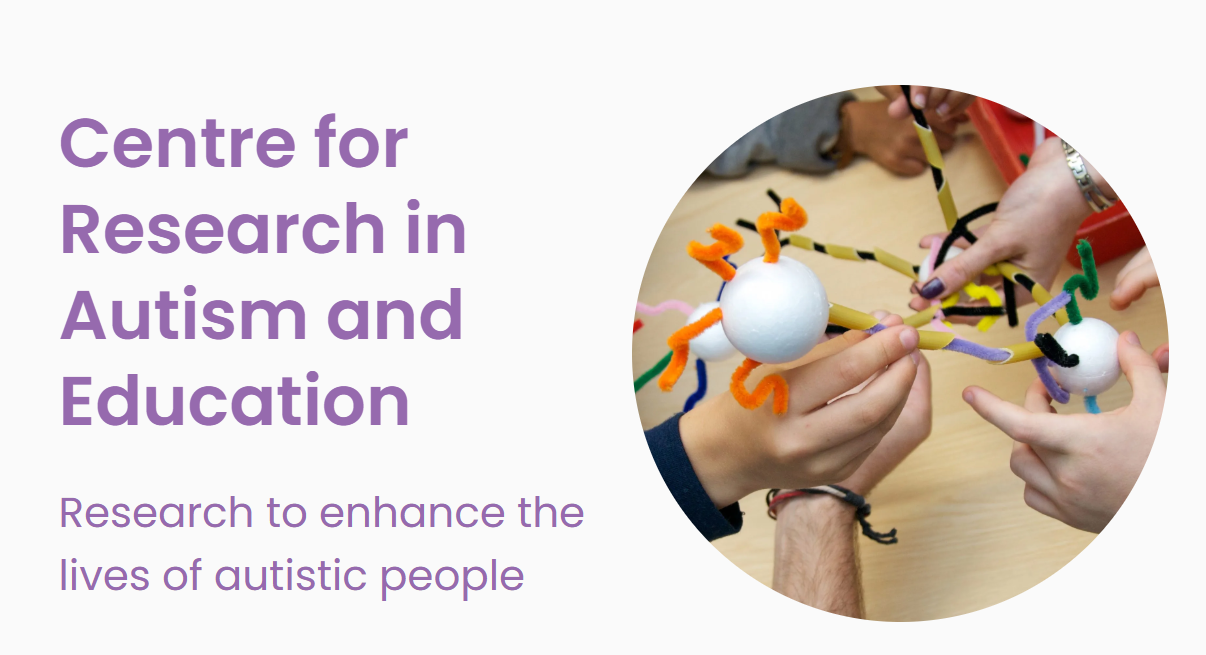
We’ve partnered with the brilliant team at the UCL Centre for Research in Autism and Education (CRAE) 🤝🧩 to explore how neurotypical and neurodivergent students — including autistic learners and those with ADHD — tackle GCSE exam questions.
🔍 Read more about the project.
This work is all about making assessments more accessible, more inclusive, and more equitable for every learner who sits down in an exam room.
💬 We’re inviting centres to take part in the next phase of this important research.
If you’re passionate about supporting neurodivergent learners and shaping fairer exams for the future, we’d love you to get involved.
On 23 February the Secretary of State for Education announced the publication of the government’s white paper on ‘Every Child Achieving and Thriving’ and SEND consultation.
There are few aspects of education that affect English teachers as closely as ensuring that all their students can access content, not only in English, but via their impact on teaching literacy, in all other subjects. Ensuring that learners with additional needs have them met appropriately is a key concern for all teachers.

We are recruiting now for examiners for the June 2026 series! This is a great opportunity to develop your understanding of the assessments and improve your support of your students as a result. See the link below for a list of vacancies.

The annual ATP conference is a great opportunity to network with fellow psychology teachers and explore new ideas in teaching. Early bird tickets are available until 31st march. This year's conference will take place at the University of Winchester from Thursday 9th - Saturday 11th July 2026.
Sign up for our free Deep Dive into Issue and Debate questions training for GCSE Psychology on Thursday 5 February, 16.00-17.30, using the link below. These sessions have been planned in response to requests from teachers for advice on how to prepare students for these exam questions. A recording of this event, and of the recent A Level 'Deep Dive' training, will be available on our YouTube training playlist in a few weeks.

The link above will also show options to access recordings of past training content, including the following playlists:
Since my last update was written we have uploaded three more free resources to the qualification web page for A Level psychology. 'Supplementary Topic Support' resources are based on articles on recent research from the BPS Research Digest blog and feature exam style questions, answers to these and examiner commentary. 'Maths in Psychology' resources feature explanation of key mathematical skills assessed in exams, questions on these and answers.
All are free and ready to download and use in the classroom!

'Key question' questions are usually 'discuss' 8 markers, but it is possible for examiners to use any length of essay to assess them, including the 20 marker on clinical psychology.
The AO1 marks (4 on an 8 marker, 6 on a 16 marker and 8 on a 20 marker) will always be on knowledge of the key question and its impact on / relevance to society.
For 'discuss' 8 markers, there are always 4 AO2 marks (in addition to the 4 AO1) and these are for application of theory from the topic to the 'key question', so research studies are generally not useful here.
If the command words 'assess', 'evaluate' or 'to what extent' are used (as they would be for a 20 marker) then the marks will be for AO1 and then AO3 (so a 8 + 12 split for a 20 marker) and the AO3 for a 'key question' question is for assessing / evaluating how far research evidence supports the application of psychology to the question / issue.
There was an 8 mark 'assess' question on the key question for cognitive psychology in the AS Level paper 1 in 2023 - it's worth a look at the mark scheme and examiner report to get a feel for what examiners might be looking for in such a question - it's question 11:
Download paper
Download mark scheme
Download examiner report
Here are the relevant specification points for IAL:
3.1.1 The role of the central nervous system (CNS) and
neurotransmitters in human behaviour, including the
structure and role of the neuron, the function of
neurotransmitters and synaptic transmission.
3.1.2 The structure of the brain, different brain areas including
the pre-frontal cortex and limbic system and brain
functioning as an explanation of aggression as a human
behaviour.
For UK A Level the relevant points are:
3.1.1 The central nervous system (CNS) and
neurotransmitters in human behaviour, including
the structure and role of the neuron, the function of
neurotransmitters and synaptic transmission.
3.1.2 The effect of recreational drugs on the transmission
process in the central nervous system.
3.1.3 The structure of the brain, different brain areas
(e.g. pre-frontal cortex) and brain functioning as an
explanation of aggression as a human behaviour.
It would make sense, in light of this, to teach about serotonin as an example of a neurotransmitter, as it is involved in the 'brain functioning explanation of aggression', and I don't think there's any need for you to teach other examples in this topic.
It's worth noting the following, given that serotonin is quite a complex example!
Serotonin is generally an inhibitory neurotransmitter but is excitatory at some synapses - it can be either because the effects of a neurotransmitter depend on the receptor protein that detects it, and serotonin has many different types of receptor. Students should understand that synaptic transmission can involve either excitation or inhibition.
Serotonin is both a hormone and a neurotransmitter. Students need to know "the role of, and research into hormones and genes in aggression" (the next specification point) but should not use serotonin for this. It is released into the blood and acts as a hormone regulating many different functions around the body - but as a hormone it is not involved in aggression.
In the brain serotonin acts as a neurotransmitter (or 'neuromodulator' as it modifies the effects of other neurotransmitters). Impulsive aggressive behaviour is triggered by the limbic system (mentioned in the specification) and especially the amygdala, and this is 'blocked' / controlled / inhibited by the prefrontal cortex through the inhibitory action of serotonin.
If the issue is that you can't download padlocked exam materials (the papers, mark schemes and examiner reports from the last 12 months) then most likely you need your Edexcel Online account re-set so you can get the Multi-Factor Authentication working. Contact our teaching services team through the support portal, or if you don't have an EOL account contact the exam officer at your school.
If you can access resources generally but the website is showing error messages, it's worth trying the following:
- Refresh the page (sometimes the first paper downloads correctly but not the second - a simple refresh can resolve this).
- Clear your browser's cache and try again.
- Try with a different browser (e.g. switch from Edge to Chrome) if you have one.
If these don't work, you can contact me at teachingpsychology@pearson.com and I can send you padlocked papers by secure file transfer.
Subject advisor
Tim Lawrence
Psychology and international Science