May 2026 International Science Qualification News
Hello colleagues,
Welcome to your May update for teachers of International Science qualifications! This update has news of a new free lab setup materials resource for International GCSE sciences, a reminder of support for centres affected by the conflict in the Middle East, and guidance on using examiner reports for final exam preparation. It also repeats information on the scientific article for IAL Biology.
As ever, don't hesitate to get in touch if I can help in any way - why not book a Teams call with me (follow the link below) if it would be helpful to talk something over?
Best wishes,
Tim Lawrence
Pearson Edexcel Subject Advisor for International Science Qualifications

In this update:
- Key dates
- General update: support for centres affected by the conflict in the Middle East
- New free lab setup materials list resource
- IAL Biology scientific articles available
- Upcoming training (CPD) opportunities
- Examiner reports - recommended for exam preparation
- FAQs from teachers of international science courses
| 13 August | Results day for June 2026 IAL series |
| 20 August | Results day for June 2026 IG series |
We know the ongoing conflict in the Middle East continues to affect students, families and centres in very real ways.
This page is regularly updated and brings together the latest guidance and support available for students whose learning and assessments have been disrupted, with any new updates added here as the situation continues to evolve. It includes guidance on the submission of portfolio evidence for students on the 'international contingency grading' route.
If you have any questions about this process please get in touch at teachingscience@pearson.com - include 'FAO Tim Lawrence' in the subject of your query.
GCSE and A level Summer 2026 assessment materials release dates are provided in our knowledge article.
Equation sheets for International GCSE Physics exams (including the Physics exams for Double Award and Single Award Science) are confirmed for exams in 2026 and 2027 - the same sheet will be provided as for the 2025 series (available under 'teaching and learning materials' and 'summer 2025 support' for the linear version, and under 'exam materials' for the modular version).
An Ofqual consultation on proposals to continue providing equation sheets as support materials for students taking GCSE exams in England from 2028 onwards took place in March and has now closed.
Ofqual is currently analysing the feedback received. You can read more about the consultation and the proposals on the Ofqual website.
We will continue to provide the same support for International GCSE candidates as Ofqual decides to provide for UK GCSE candidates.
With the summer exams about to start, we want to wish all students the very best and thank teachers for the skill, reassurance and hard work that makes such a difference at this time of year.
Thank you and remember that we are here to support. You can reach out to us via the Pearson Support Portal or email at teachingscience@pearson.com
We have recently completed a new free resource designed to support teachers and lab technicians with the process of ordering materials for the International GCSE core practicals. The interactive spreadsheet can be filtered to show different types of equipment e.g. reagents or biological specimens, and will calculate the number of items required based on the number of groups of students entered. It can also calculated total prices if the price per item is entered.
This resource is based on our student lab books and the numbering of the practicals for each subjects is the same as the numbering in these books.
Visit our publishing website for more information on paid-for resources including the Lab Books.

The scientific articles for IAL Biology Unit 5 (WBI15) are availabe now on the 'teaching and learning materials' page - see link below, and a link to our FAQ document on how teachers should use the article to help students prepare for this exam.
For this series there are two scientific articles, the standard WBI15_01 article and the WBI15_01A article which is for candidates taking the new regional paper. This is only available in a specific region – most countries covered by the regional International GCSE papers are not included in this. If your students sat IAL biology exams in October 2025 or January 2026, they would have sat the regional 'A' paper if you were in the relevant region and you should use the WBI15_01A article. If in doubt, please check with your Exams Officer who will receive official confirmation to covering which article you should use., or feel free to contact me on teachingscience@pearson.com FAO Tim Lawrence.
In addition to the in-person training running this week in Colombo, we have new training events now ready to book in Dhaka in August.
If you missed the recent online preparing for exams training delivered by our International Science Subject Partner Jonathan Wong, you can now access the recordings of these events via the links below!
View all International Science courses available and book your places.

We also provide centre-based training opportunities. If this is something you would like to explore, please visit our training page below.
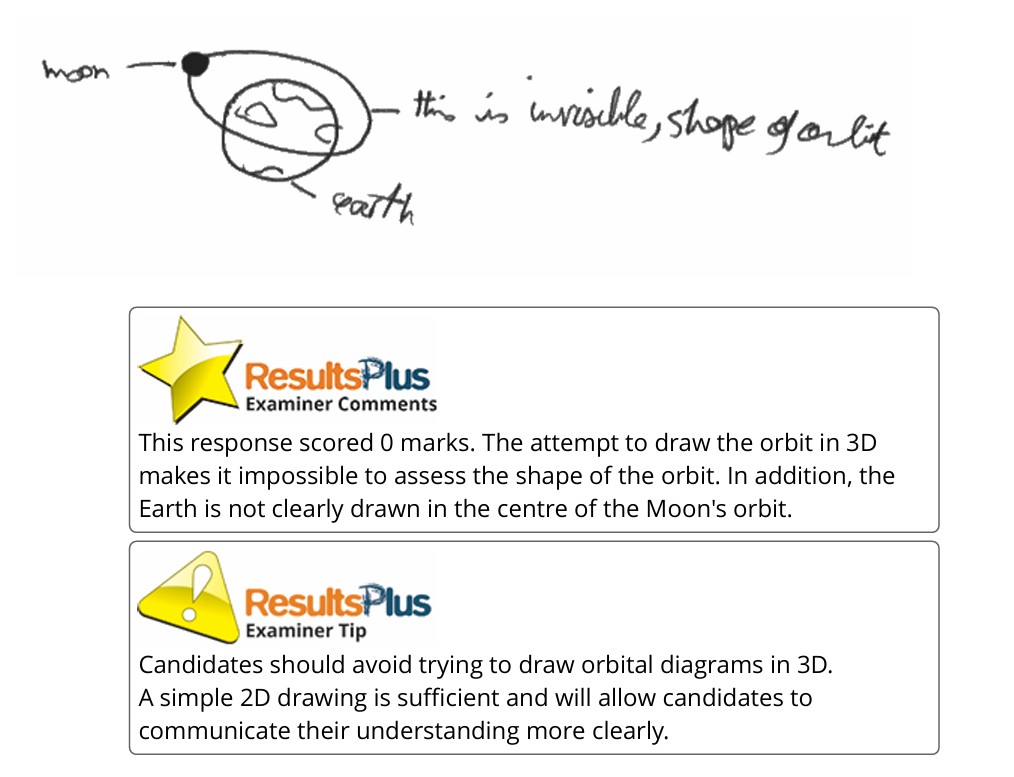
Examiner reports are a fantastic resource for helping teachers to understand what examiners are looking for, but are also a great (and under-used) resource for students to use themselves. Particularly in the days before their exams, the examples of candidate responses with examiner commentary explaining why marks were or were not awarded can really help students to avoid common errors and really show what they know.
Examiner reports from exams over 12 months ago are all publicly available in the 'exam materials' section of each qualification web page. Students preparing for modular International GCSE exams will find the many examiner reports from past linear IG exams equally valuable, as the question styles and marking criteria are the same (but reassure them that if they are preparing for Unit 1 of a modular course they won't need to know all the content that is assessed in the linear paper 1).
The questions below have been asked during training events recently, in our Facebook group or in emails to teachingscience@pearson.com:
The Core Practical activities for our International A Levels in the sciences are supported by student and technician sheets available as part of the Teacher Resource Packs. If you wish to carry out the additional recommended practicals names in the IAL Biology specification, you may find some of the following free online resources helpful.
Investigate the structure of a mammalian heart by dissection
Save My Exams – Mammalian heart dissection
Clear overview of apparatus and method suitable for A level teaching.
CBAC – Dissection of a mammalian heart (PDF)
Detailed procedure with labelled observations and safety notes.
The Biology Corner – Heart dissection walkthrough
Step‑by‑step guidance with images, useful for teacher demonstration.
Investigate tissue water potentials using plant tissue and graded concentrations of a solute
Save My Exams – Investigating water potential
Standard potato cylinder method with equipment list and data handling.
Physics & Maths Tutor – RP Investigating water potential (PDF)
Clear dilution series, risk assessment and graphing guidance.
Hong Kong EDB Practical 11 (PDF)
Detailed length‑ and mass‑based approaches with sucrose concentrations.
Use a semi‑quantitative method to estimate protein concentration using biuret reagent and colour standards
BenchChem – Biuret test technical guide
Explains colour standards, proportionality and semi‑quantitative use.
GyanKosh – Determination of protein concentration by Biuret method (PDF) Clear school‑level protocol including preparation of standards.
G‑Biosciences – Biuret protein assay teacher handbook (PDF)
Useful for understanding colour standards and expected ranges.
Investigate factors affecting the growth of pollen tubes
Practical Biology – Observing the growth of pollen tubes
Excellent practical guidance, equipment lists and culture media notes.
Science & Plants for Schools (SAPS) – Pollen tube growth
Teacher‑tested protocols with microscope work and timing guidance.
Physics & Maths Tutor – Sucrose concentration and pollen tube growth
Adaptable method aligned to A level investigative skills.
Investigate plant mineral deficiencies
SNAB Biology – Investigating plant mineral deficiencies
Clear method using Bryophyllum plantlets and nutrient solutions.
Physics & Maths Tutor – Plant mineral deficiencies (PDF)
Equipment lists, risk assessment and expected deficiency symptoms.
Practical Biology – Investigating the effect of minerals on plant growth
Broader options using duckweed, algae or seedlings.
Investigate habituation to a stimulus
SNAB Biology – Investigating habituation to a stimulus
Clear snail‑based protocol with variables and ethical notes.
Physics & Maths Tutor – Habituation to a stimulus (PDF)
Concise method, equipment list and graphing expectations.
Save My Exams – Habituation (includes practical context)
Useful background plus reference to experimental approach.
Subject advisor
Irine Muhiuddin and Tim Lawrence
UK and International Science